
Search Intent
Not All Searches Are Equal.
5 min read
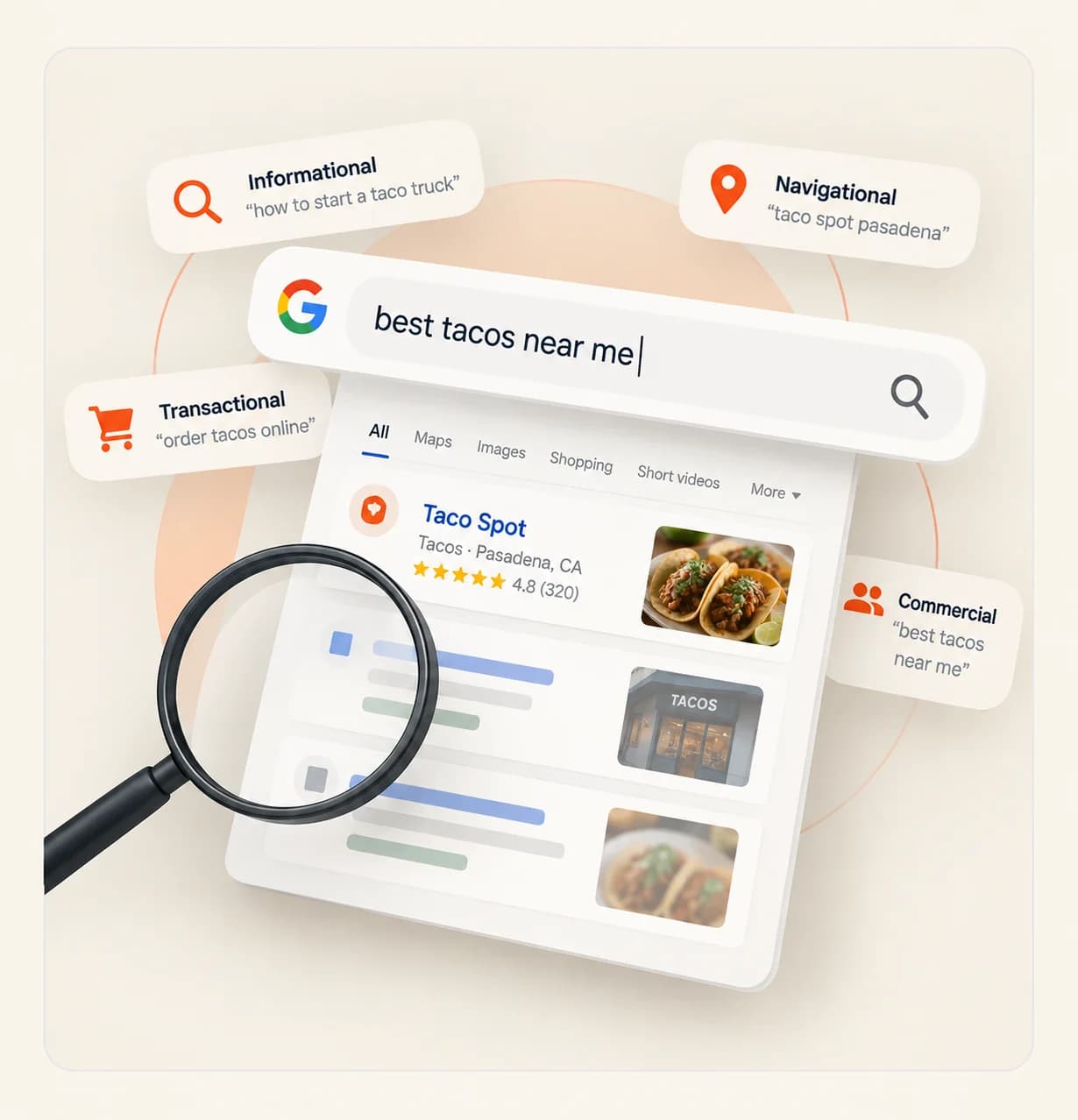
Two people search on the same afternoon. One types "how does air conditioning work." The other types "ac repair near me open now."
Both are searches. Only one is a customer. The words people choose carry a surprising amount of information about what they intend to do next, and matching your ads to that intent is most of the difference between advertising that works and advertising that drains.
Three kinds of searching
Most searches fall into one of three broad modes, and they're easy to tell apart once you're looking for them:
- Learning — "why is my ac blowing warm air." They want an answer, not a business. Advertising here is expensive and rarely converts.
- Comparing — "best ac repair company reviews." They've accepted they need help and are deciding who. Worth reaching, but they're still shopping.
- Ready — "ac repair near me," "emergency ac repair open now." They want someone today. This is where a local ad budget earns its keep.
Why the ready searches cost more, and are still the bargain
Terms that signal readiness are competitive, because every business in your area wants them. A click can cost several times what a learning-mode click costs.
It's still usually the better spend. Paying more for a click from someone actively trying to hire is cheaper per customer than paying less for a hundred clicks from people doing homework. Cost per click is the number that's easy to see. Cost per customer is the number that matters.
Small words that change everything
Certain words reliably mark someone who's ready: near me, open now, today, emergency, same day, quote, cost, price. Others reliably mark someone who isn't: how, why, diy, yourself, free, what is.
That second list is worth as much as the first. Telling Google which words should never trigger your ad stops you paying for the wrong audience, and it's one of the fastest improvements available to most accounts.
Match the promise to the moment
Someone searching in ready mode doesn't want a brand story. They want to know you cover their area, you're available, and what happens next. An ad that says "Same-day AC repair in Glendora — call now" does more work than one that says "Excellence in home comfort since 2009."
The page they land on has to keep that promise. If the ad says same-day and the page doesn't mention it, the click is wasted at the last possible second.
You can't change how many people need you this week. You can make sure your money reaches the ones who do.