
Google Ads Basics
A Simple Guide to Google Ads for Local Businesses.
7 min read
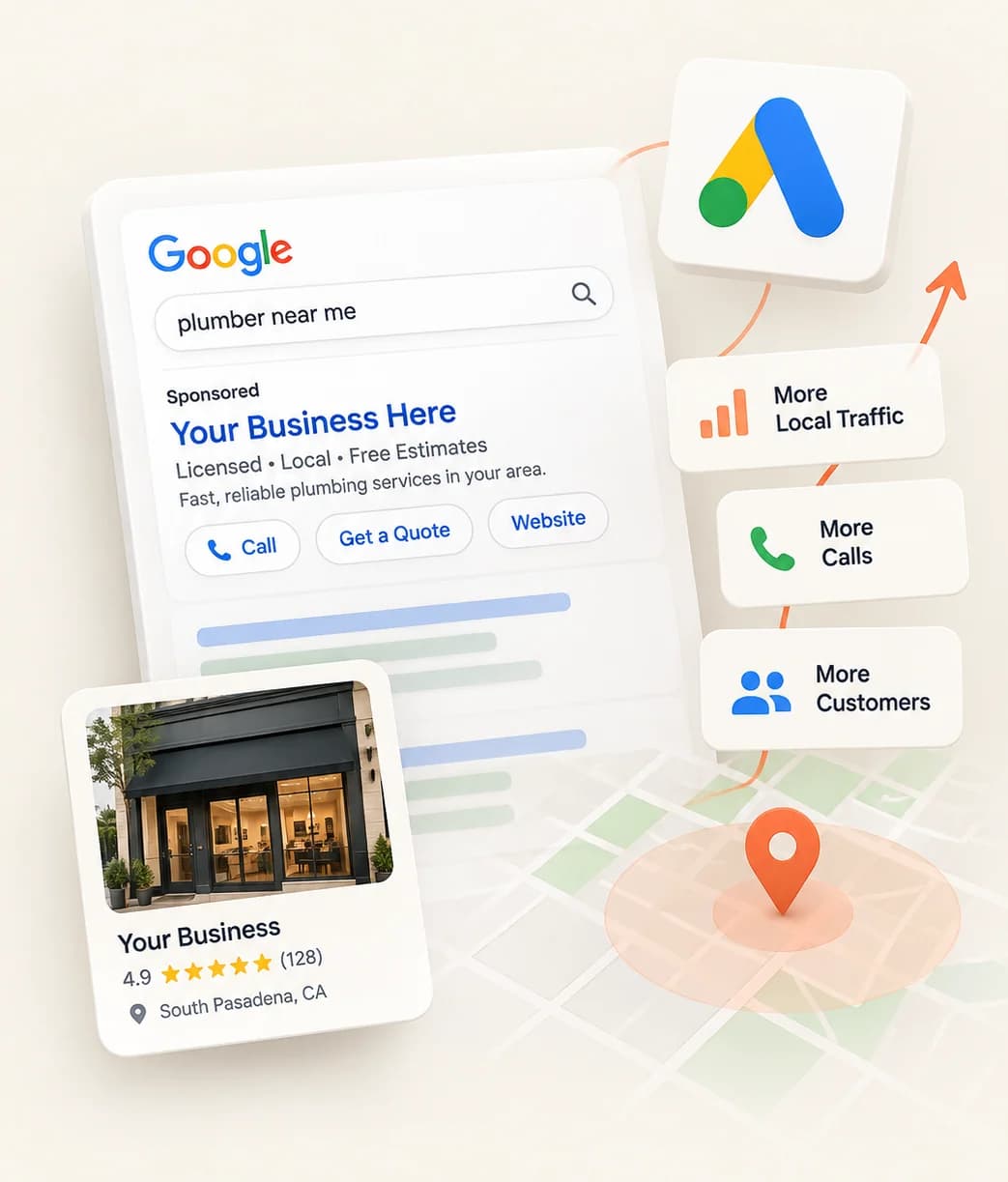
Google Ads gets explained either in jargon or in hype. Here it is plainly, for someone running a business who wants to know what they'd be buying.
What you're actually paying for
When someone searches, Google shows a few ads above the normal results. You pay only when someone clicks. Showing up costs nothing.
That single detail is what makes search advertising different from a billboard or a radio spot. You're not paying to be seen by a general audience. You're paying to be chosen by someone who just described their problem in their own words.
How Google decides who appears
It isn't purely who pays most. Google weighs your bid against how relevant your ad is to the search and how good the experience is likely to be when someone clicks.
The practical consequence is encouraging for a small business: a specific, honest ad pointing at a page that delivers what it promised can outrank a bigger competitor bidding more with something generic. You cannot outspend a national chain. You can out-specific them.
What it costs
You set a daily budget and Google won't exceed it over the month. Click prices vary enormously by trade — a click for an emergency home service costs far more than one for a coffee shop, because the job behind it is worth far more.
The number to watch isn't cost per click. It's what a customer costs you. A $12 click that produces a $600 job is excellent. A $2 click that produces nothing is expensive.
What a campaign is made of
Under the terminology, the pieces are simple:
- Keywords — the searches you want to appear for.
- Negative keywords — the searches you want to be excluded from. Just as important, and usually neglected.
- Ad copy — the few lines someone reads before deciding to click.
- Location targeting — the area you'll accept customers from.
- Landing page — where the click goes, and where most campaigns are won or lost.
- Budget — the daily ceiling.
What to expect, honestly
The first week or two is information, not performance. Early clicks reveal which searches actually trigger your ads, and some of them will be irrelevant in ways nobody could have predicted. Trimming those is normal work, not a sign something is broken.
Results are rarely a smooth line. Local demand is lumpy — weather, weekends, seasons. Judging a campaign on three quiet days will mislead you in both directions.
And advertising cannot fix a business problem. If calls go unanswered or prices are far off the local market, more traffic just produces more missed opportunities at a faster rate.
When it's a good fit, and when it isn't
Search advertising works best when people actively look for what you sell, when a customer is worth meaningfully more than a click, and when you can respond quickly.
It's a poor fit when nobody searches for what you do, when you can't handle more work, or when there's no way to answer the phone during business hours. Those are worth knowing before you spend, not after.
Google Ads is a way to be present at the exact moment someone decides they need what you do. Everything else is detail.
Common questions
01How much do Google Ads cost for a small business?
You set a daily budget and Google will not exceed it over the month, so the spend is under your control. What varies enormously is the price of a click — an emergency home service click costs far more than a coffee shop click, because the job behind it is worth far more. The number that matters is not cost per click but what a customer ends up costing you.
02How long before Google Ads start working?
The first week or two is information rather than performance. Early clicks reveal which searches actually trigger your ads, and trimming the irrelevant ones is normal work, not a sign something is broken. Judge a campaign over weeks, not days — local demand is lumpy.
03Do I need a website to run Google Ads?
You need somewhere for the click to land that delivers what the ad promised. That can be a single well-built page rather than a full site, but sending paid traffic to a page that does not answer the question is the fastest way to waste a budget.
04Is Google Ads better than Facebook ads?
They do different jobs. Someone searching has already decided they have a problem and is looking for a solution now. Someone scrolling has not. For urgent local services, search usually wins; for building awareness of something people are not actively seeking, social can make more sense.